Palm oil, beef and lard: what's in Korean instant ramen soup
K-Food Label · Updated Nov 2, 2026
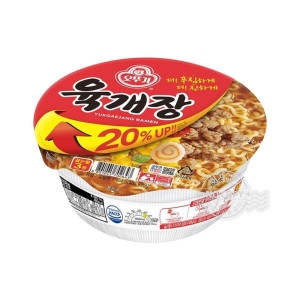
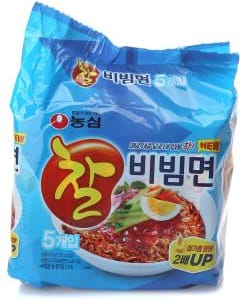
Korean instant ramen tastes of beef or pork stock, yet there is hardly any meat in the packet. What there is comes as powders, extracts and fat. We checked 234 noodle products in the official Korean label data, instant ramen plus dried and fresh noodles, for oils and animal ingredients.
The short version: the fat is mostly palm oil and sits in the noodles, the meat is mostly beef and sits in the soup, and about half of all products add pork as well.
Palm oil: the frying fat
152 of 234 noodle products (65%) list 팜유 (pamyu, palm oil). That is essentially every fried noodle block: instant noodles are steamed and then fried, which is why palm oil appears in the part of the label marked 면 (myeon, noodles). Air-dried noodles such as 소면 (somyeon) and 칼국수 (kalguksu) do not use it. Where the label names an origin for the palm oil, it is Malaysia.
Palm oil is plant-based, so it matters for health or environmental reasons, not for religious or vegetarian diets. The soup packets add a second kind of fat, 향미유 or 조미유 (flavour oil): usually soybean or palm oil cooked with garlic, onion or chilli, and in some products with beef or pork fat.
Beef: in most soups, rarely as meat
160 of 234 noodle products (68%) list beef. Almost none of it is pieces of meat. It is 쇠고기 분말 or 소고기맛 분말 (beef or beef-flavour powder), 사골 (sagol, beef leg bone) extract, 비프 조미분 (beef seasoning) or 쇠고기 육수 분말 (beef stock powder). Shin Ramyun, Jin Ramen and Neoguri all list beef this way. Ramen sold as seafood or chicken often has a beef base too: Nongshim Neoguri Mild Seafood Udon and Samyang Buldak Hot Chicken Ramen both list beef in their label data.
Beef tallow, 우지 (uji), is now rare. Some Korean ramen was fried in tallow until the 1989 "tallow scandal" (우지 파동), after which makers moved to palm oil. In the current data, 1 noodle product lists it: Ottogi Budae Jjigae Ramen, with 식용우지 (edible beef tallow) in its soup.
Pork and lard
115 of 234 noodle products (49%) list pork. Like beef, it mostly comes in the soup: 돈골 (dongol, pork bone) extract, pork-flavour seasoning, or 돼지고기 (pork) declared in the allergen line inside a compound seasoning you cannot see. Most ramen that list pork also list beef, because the two are blended in the same stock base.
Lard, written 돈지 (donji) or 라드, appears in 13 noodle products. Most are jjajang (black bean sauce) noodles, such as Paldo Jjajangmyeon and Paldo Gonghwachun, where lard is the traditional frying fat for the sauce. It also turns up in Ottogi Sesame Ramen, as 돈지, and in Nongshim Neoguri Cup, as 조미돈지분말 (seasoned lard powder).
Size and recipe change the answer
The same brand can differ by size: Shin Ramyun Cup does not list pork in its Food QR label, but Shin Ramyun Big Bowl does. And a ramen without pork is rarely meat-free. The products below list no pork, no alcohol and no gelatin, but the most popular ones list beef or chicken, so they suit a no-pork diet, not a vegetarian or halal one.
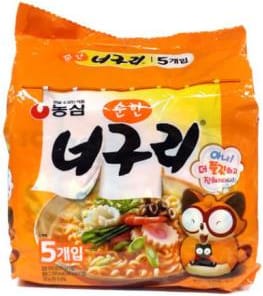
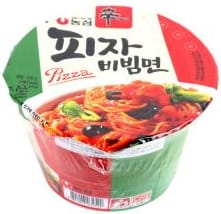
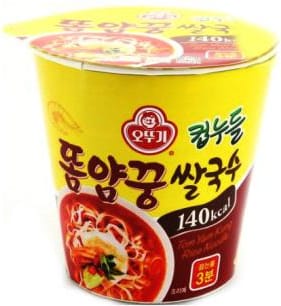
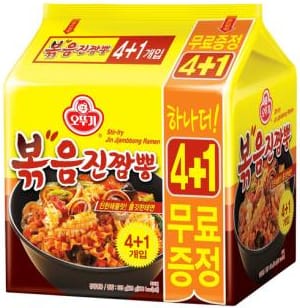
How to read a ramen label
Korean ramen labels split the ingredients into 면 (noodles) and 스프 (soup), and sometimes 분말스프 (powder), 액상스프 (liquid soup) and 후레이크 (dried flakes). Palm oil is almost always in the noodle part; meat is almost always in the soup part. For beef, look for 쇠고기, 소고기, 사골, 우골, 비프 and 우지. For pork: 돼지고기, 돈골, 돈육, 돈지, 라드 and 포크. Then check the allergen box (알레르기 유발물질), where 쇠고기 and 돼지고기 must be declared whenever they are used.
Much of the noodle data comes from the HACCP label dataset, which can be older than the package on the shelf. Recipes change, so use our product pages as a guide and the printed label as the final word.
Numbers are computed from the Food QR label data published by Korea’s Ministry of Food and Drug Safety and update every week. Products without allergen data (460) are excluded.